Personal Stories
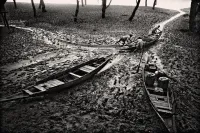
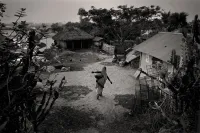
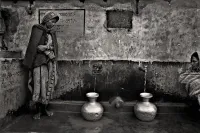
Through personal stories Wasif illustrates the changes occurring in the far south-west of Bangladesh. He traversed the area on a motorcycle and took photographs of the inhabitants whom he encountered. From a distance, he portrayed two women waiting for their pitchers to be filled with fresh water from the only filters in the area. Another photograph shows a young woman covered with a blanket who sits in front of a loam hut, clearly feeling unwell. Elsewhere he portrayed three brothers pushing their boats, with only the jerrycans filled with fresh water they had collected inland as cargo, through low tide into the sea. The three boats etch a keel-trail in the squelchy, sterile mud. At the horizon, away from these three plodding men, the sun reflects in the only water present. Not explicitly but subtly instead, this photo series makes visible just how catastrophic flooding and the shortage of fresh drinking water influence daily life in this corner of Bangladesh.
Onbalans
De onbalans van het ecosysteem heeft zijn impact op het werk, de gezondheid en het leven van de Bengalen. De precieze oorzaak van de schommelingen in het zeewaterniveau is onduidelijk. Slechts één feit is meetbaar: het zoutgehalte in de grondwaterspiegel neemt toe. Het leidt tot een kettingreactie aan gebeurtenissen. Landbouw is onmogelijk geworden. De oude beplanting groeit niet meer. Nieuwe inkomstenbronnen worden gezocht. Zo ontwikkelt de garnaalvisserij zich in rap tempo; een manier van geldwinning die minder arbeidskracht vraagt. De garnalenteelt stelt tegelijkertijd steeds meer land bloot aan brak water. Vrouwen moeten dieper de mangrovemoerassen in om drinkwater te halen. Een risicovol gebied waar haaien, krokodillen, cobra's en de Bengaalse tijger leven.
Munem Wasif
Munem Wasif (1983) lives and works in Bangladesh. He is a graduate of Pathshala, the South Asian Institute of Photography. He started his photographic career as a feature photographer for the Daily Star, a leading English daily in Bangladesh. His photographs have been published in numerous national and international publications including Le Monde, Himal Southasian and Asian Geographic.
About your visit
Frequently Asked Questions
Skip listThe Kunsthal is open from Tuesday to Sunday, from 10:00 to 17:00 hrs. The Kunsthal Café opens half an hour earlier, so you can visit from 9:30 hrs until half an hour after closing time. Check the current opening hours.
Yes, you need to book a ticket with a start time in advance. This also applies if you have a Museum card, Rotterdam pass, or VriendenLoterij VIP Card. This way, you are guaranteed admission and we can ensure that your visit is as pleasant as possible. Book your start time.
Yes, with an online ticket, you can visit all the exhibitions that are on display on the date of your visit. You can also stay as long as you like. You are welcome at the Kunsthal from your designated start time until closing time. Book your start time.
In de Kunsthal Rotterdam zijn altijd meerdere wisselende en contrastrijke tentoonstellingen tegelijk te zien. Een volledig overzicht van alle actuele tentoonstellingen vind je op de tentoonstellingspagina.