
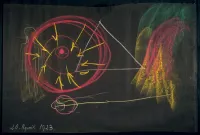
Steiner served as a source of inspiration for some artistic giants including Piet Mondriaan, Wassily Kandinsky and Josef Beuys, and still does so for many contemporary artists and designers, such as Olafur Eliasson and Konstantin Grcic. The exhibition presents a rich and extensive collection of furniture, models and blackboard drawings, offering a fascinating insight into his life, work and sweeping intellectual legacy.
An attractive programme of activities focussing on nutrition, architecture, dance and social entrepreneurship, along with a Steiner-day and symposium, reveal Steiner's ideas in a modern light.
Innovative Ideas
In the late nineteenth century, Steiner presented his ideas as a universal way of life in which science, art and spirituality were one and the same thing. In Steiner’s vision, everything is connected; the planetary system influences the growth and development of nature and man’s well-being, and he felt that man should be aware of this. He developed the anthroposophical doctrine, which is based on man’s free progress through research, inner development and linking the earthly with the spiritual. Steiner used his artistic and philosophical views to improve everyday life in a practical fashion. Along with some strong criticism, Steiner’s innovative ideas attracted many followers. Over a century later, hundreds of Steiner free schools, health clinics, farms and financial institutions still follow his anthroposophical principles.
Intriguing Interplay
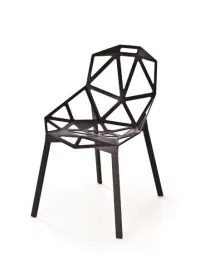
The Kunsthal exhibition places Steiner in the context of his day, a time when new art movements were appearing and scientific discoveries being made in rapid succession. It shows how Steiner, under these influences, developed and shared his ideas with the world. The exhibition also highlights Steiner’s intriguing interaction with famous contemporaries such as Franz Kafka, Piet Mondriaan, Wassily Kandinsky and Frank Lloyd Wright. ‘Alchemy of the Everyday’ also shows how Steiner developed an entirely new organic aesthetic in architecture and design. The furniture and buildings with their natural shapes that are so characteristic of Steiner’s work, exhibit a clear parallel with contemporary design by artists, designers and architects including Olafur Eliasson, Ronan & Ewan Bouroullec and the Rotterdam-based 24H Architecture.
Partners





About your visit
Frequently Asked Questions
Skip listThe Kunsthal is open from Tuesday to Sunday, from 10:00 to 17:00 hrs. The Kunsthal Café opens half an hour earlier, so you can visit from 9:30 hrs until half an hour after closing time. Check the current opening hours.
Yes, you need to book a ticket with a start time in advance. This also applies if you have a Museum card, Rotterdam pass, or VriendenLoterij VIP Card. This way, you are guaranteed admission and we can ensure that your visit is as pleasant as possible. Book your start time.
Yes, with an online ticket, you can visit all the exhibitions that are on display on the date of your visit. You can also stay as long as you like. You are welcome at the Kunsthal from your designated start time until closing time. Book your start time.
In de Kunsthal Rotterdam zijn altijd meerdere wisselende en contrastrijke tentoonstellingen tegelijk te zien. Een volledig overzicht van alle actuele tentoonstellingen vind je op de tentoonstellingspagina.