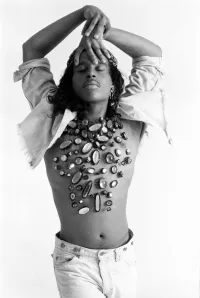
Ballroom culture originated in the New York neighbourhood of Harlem around the 1970s. Black and brown homosexual men and transgender women were often subjected to exclusion and discrimination, both from outside and within the LGBTQIA+ community. They started creating their own, chosen families, the so-called houses. These houses came together during balls; safe spaces where different ideals applied than in the outside world with its white and heterosexual standards. Dressed in extravagant robes, ballgowns, and uniforms, they were able to take centre stage in search of fame and status within the community – with queens imitating the poses of fashion models in an attempt to outperform each other on the dancefloor. Posing evolved into a stylised form of dancing, known as voguing, with influences from Asian martial arts, Egyptian hieroglyphics, and fashion. The vogue performance categories soon became some of the most popular during the balls. Although the AIDS-epidemic claimed the lives of many ballroom pioneers in the 1980s and early 1990s, it certainly did not mean the end of the community and their legacies are carried on to this day. The culture has since spread around the globe, and by now there is also a thriving community in the Netherlands.
Expressive power
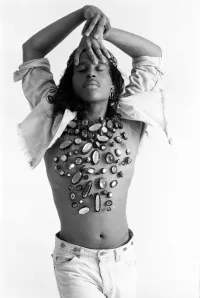
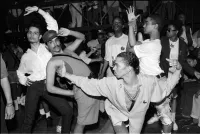
The exhibition focuses on the most important aspects of ballroom culture, from the 1980s up until now. Thirty black-and-white photographs by the French-Haitian documentary photographer Chantal Regnault tell the story of the social structures and mutual affection within the chosen families. Between 1989 and 1992, Regnault frequently portrayed members of the New York houses. The exhibition includes portraits of legendary mothers and fathers, posing families, and members of the queer community at balls while engaged in different categories like fashion, realness, body, and vogue performance. Images of people like Willi Ninja (1961-2006), aka the Godfather of Voguing, in provocative poses emphasise the expressive power of vogue. With excerpts from the documentary ‘Voguing: The Message’ (1989), the exhibition provides background information about this underground phenomenon.
Especially for the exhibition, the documentary maker Ottilie Maters captured each of the five elements of vogue performance on camera: duckwalk, catwalk, hands, floor performance, and spins & dips. Also included in the exhibition are video images by Maters showing the contemporary European scene. The interviews with people from the community not only show how the houses and participants prepare for the competitive balls in this day and age, but also reveal that these houses still function as a social safety net for people who have to battle discrimination and stigmatisation on a daily basis. Ballroom offers them a world where they can be exactly who they are.
The exhibition is designed by the multidisciplinary fashion house MAISON the FAUX.
Partners
Exhibition partners




About your visit
Frequently Asked Questions
Skip listThe Kunsthal is open from Tuesday to Sunday, from 10:00 to 17:00 hrs. The Kunsthal Café opens half an hour earlier, so you can visit from 9:30 hrs until half an hour after closing time. Check the current opening hours.
Yes, you need to book a ticket with a start time in advance. This also applies if you have a Museum card, Rotterdam pass, or VriendenLoterij VIP Card. This way, you are guaranteed admission and we can ensure that your visit is as pleasant as possible. Book your start time.
Yes, with an online ticket, you can visit all the exhibitions that are on display on the date of your visit. You can also stay as long as you like. You are welcome at the Kunsthal from your designated start time until closing time. Book your start time.
In de Kunsthal Rotterdam zijn altijd meerdere wisselende en contrastrijke tentoonstellingen tegelijk te zien. Een volledig overzicht van alle actuele tentoonstellingen vind je op de tentoonstellingspagina.